
The content and quality of work you produce is tied to intelligence. But your ability to get yourself to start and continue work tasks, resist distractions, switch tasks when needed, etc., has little to do with intelligence. Those are just productivity skills.
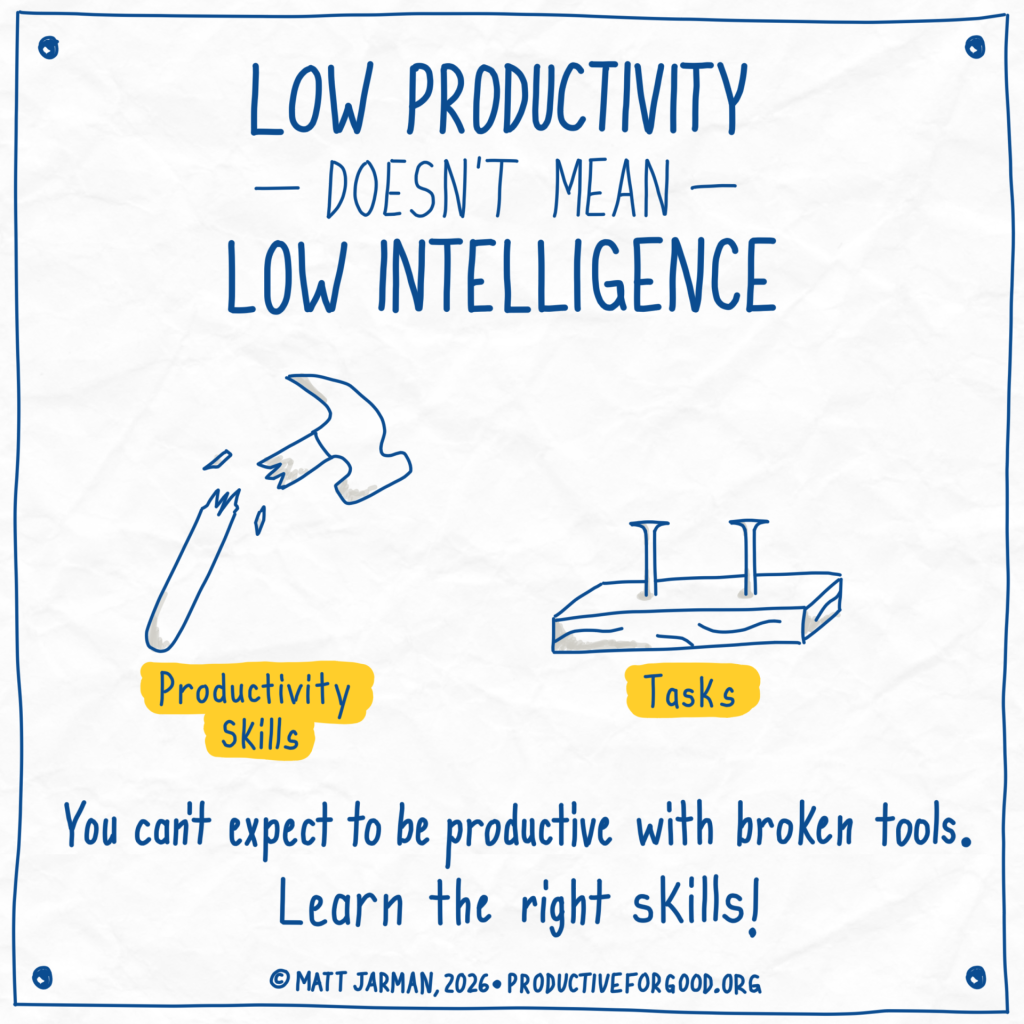
Low productivity isn’t a sign of low intelligence
Productivity skills simply depend on your ability to identify which productivity techniques you need, and when. If you’ve never been taught the productivity techniques, how can not using them be a reflection of low intelligence?
Think of it this way, once you finally learn the core productivity techniques and how to incorporate them into your life in a sustainable way, your productivity will increase. Has your intelligence increased? No, you just developed new skills and incorporated them into your life.
And for those who think, “I shouldn’t need techniques to be productive!” I get that sentiment. But our brain didn’t evolve to sit in front of a computer doing boring tasks all day. You need techniques that will allow you to thrive despite these unnatural demands we put on our brains.
Unsuccessful attempts to be more productive aren’t a sign of low intelligence either
If you’ve read lots of articles and books on productivity but still haven’t had any success, that’s more likely a reflection of the teacher than of the student.
Most of the productivity content I come across isn’t great. It’s incomplete, superficial, and rarely gives you the core productivity basics. So the fact that this content hasn’t helped you is more a reflection of the content than you.
Tying productivity to intelligence is harmful
Associating productivity with intelligence is a problem for a few reasons:
- Self-view: It leads to harmful self-views that get in the way of identifying helpful productivity strategies. Thinking “I must not be smart enough to get my work done” doesn’t help anyone. It just leads to a sense of helplessness which holds you back from seeking out better strategies.
- Helping others: It makes you less likely to give people the support they actually need. If you see a friend, colleague, or family member who struggles to get their work done and interpret that as them just not being smart enough, you’re more likely to give up on them or suggest that they take less work on, instead of helping them find techniques that will help.
- Perpetuating a harmful stigma: Associating productivity with intelligence creates an inaccurate and harmful stigma for people who struggle with productivity due to a mismatch between how their brains work and the demands of their school or work environment. For example, people with ADHD (such as myself) are already being told by society that something is wrong with them (I disagree!). If we see low productivity as additional evidence of something being wrong with us, it will just perpetuate these falsehoods. Low productivity is just a sign that we haven’t found the right productivity techniques yet—that’s it!
Look for better tools
If a broken hammer kept missing the nail, your default response wouldn’t be to question your intelligence. You’d try a different hammer. If your current productivity strategies aren’t leading to the productivity you want to see, it’s not you, it’s your strategies. So find techniques that work for you!